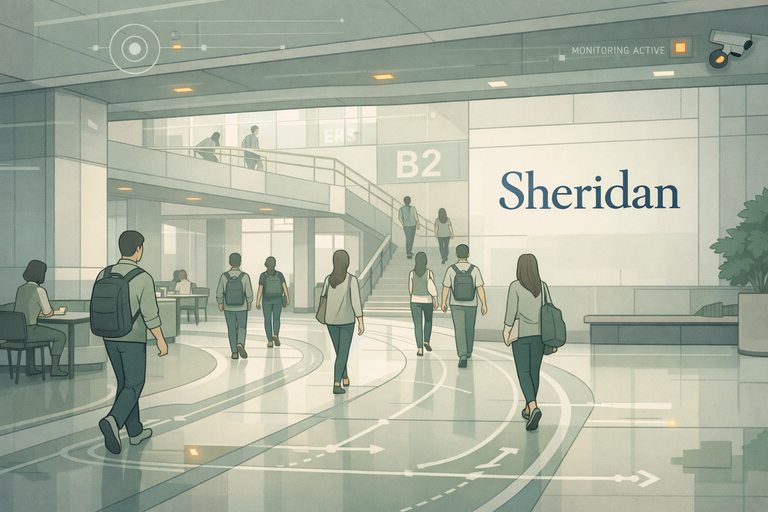
Final Concept
The story begins with an ordinary public clue and expands into a hidden system of records, traces, and gradual discovery. The audience moves from everyday campus life toward an awakening about the reality around them.
Cognitive Walkthrough
A three-platform interactive narrative inspired by Plato's Allegory of the Cave. The project turns a familiar campus into a controlled reality, moving the audience from an ordinary public clue into hidden records, system traces, and an immersive reveal.
01
Beyond the Shadows reimagines Plato's cave as a familiar college campus, where comfort, routine, and institutional order hide a deeper structure of control.
The story begins with an ordinary public clue and expands into a hidden system of records, traces, and gradual discovery. The audience moves from everyday campus life toward an awakening about the reality around them.
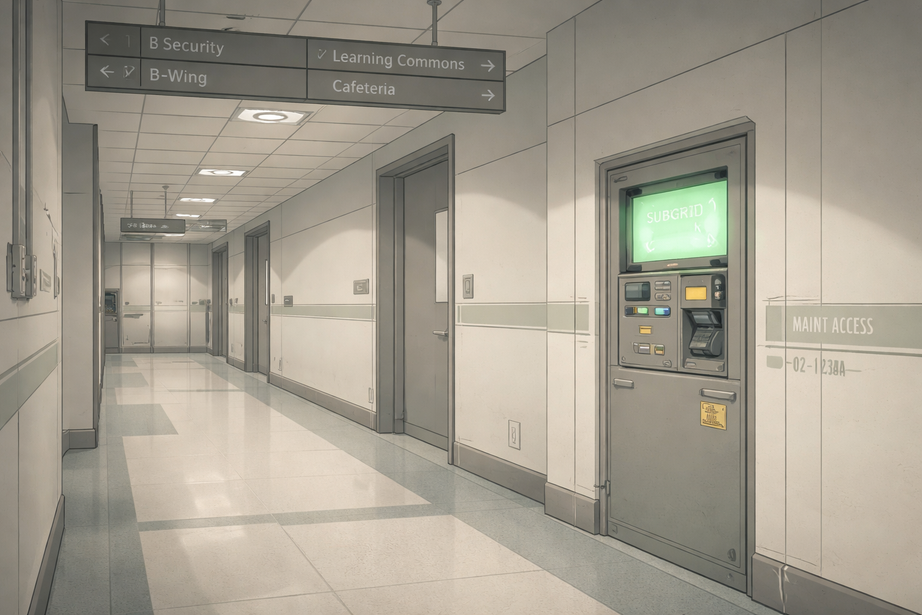
The participant plays a student who notices small anomalies that others ignore. Their curiosity turns a normal campus experience into a journey shaped by doubt, investigation, and the realization that the campus is actively constructing reality.
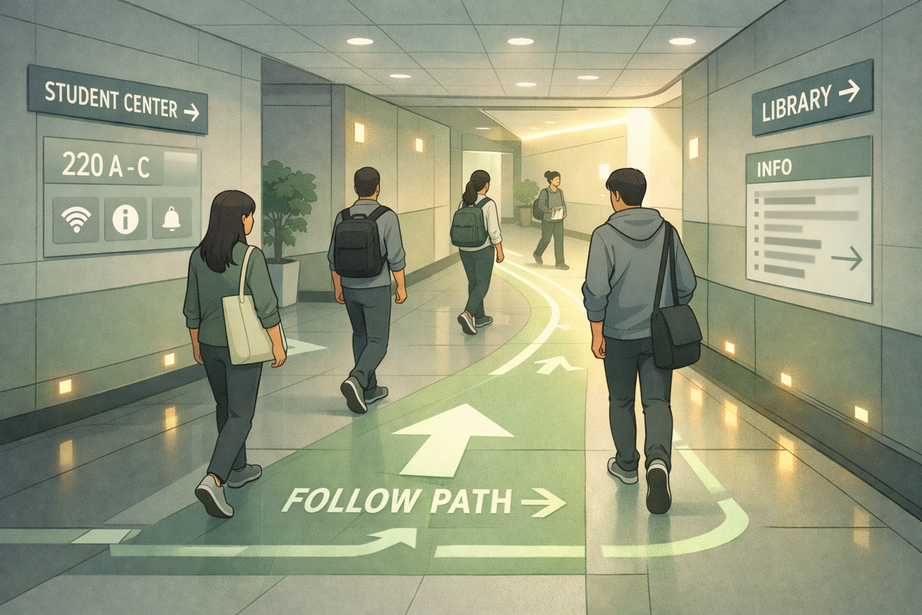
The system was first established in 1998 by Julian Mercer as a campus planning and information experiment. Over time, it shifted from management support into an invisible structure that shapes behavior, movement, and perception.
02
The walkthrough frames the narrative through the Participant, the Collective, the Hidden System, and Julian Mercer.
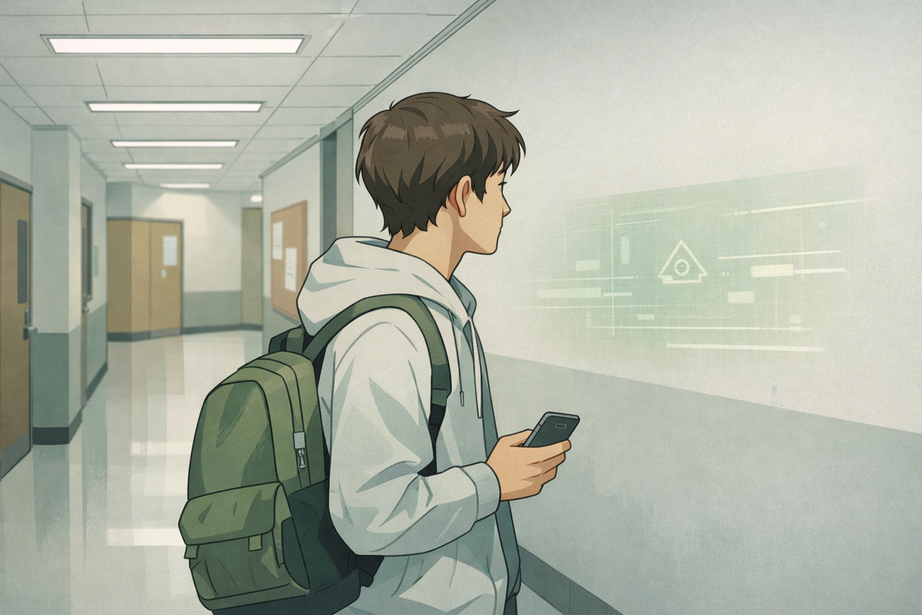
The Participant notices symbols, messages, interfaces, and patterns that feel out of place. Their role is to move from curiosity to suspicion, and eventually toward awakening.

The Collective represents the wider campus population. They may sense that something is wrong, but they have adapted to the system's routines and treat its order as natural, stable, and comforting.
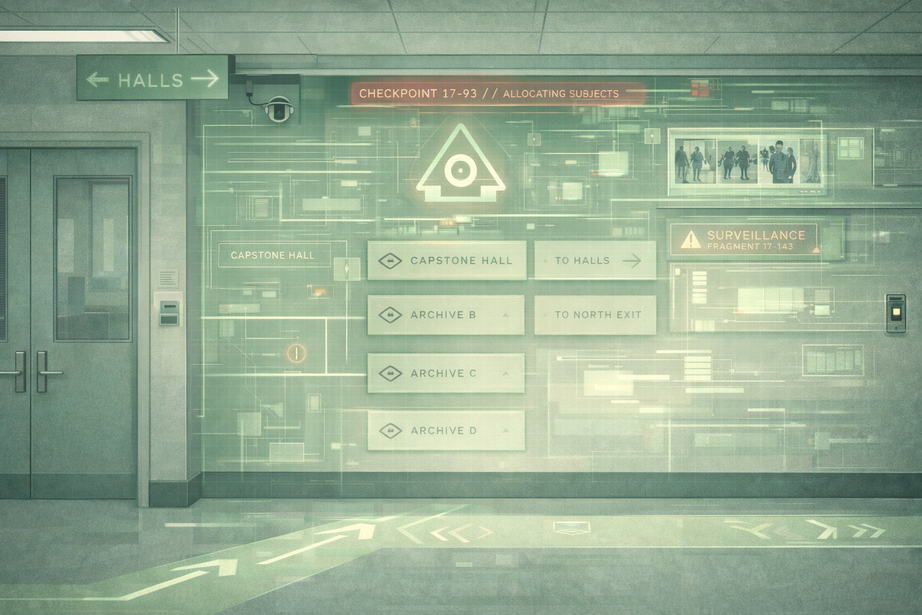
The system guides behavior through environment, repetition, spatial design, and institutional logic. It does not simply monitor campus life; it organizes the reality people move through.

Mercer is the origin of the controlled campus structure. His vision of an ideal campus based on predictability and stability becomes an ambiguous legacy after his disappearance.
03
The audience journey is designed for college students, young adults, puzzle players, and viewers interested in mystery, exploration, constructed realities, and institutional control.
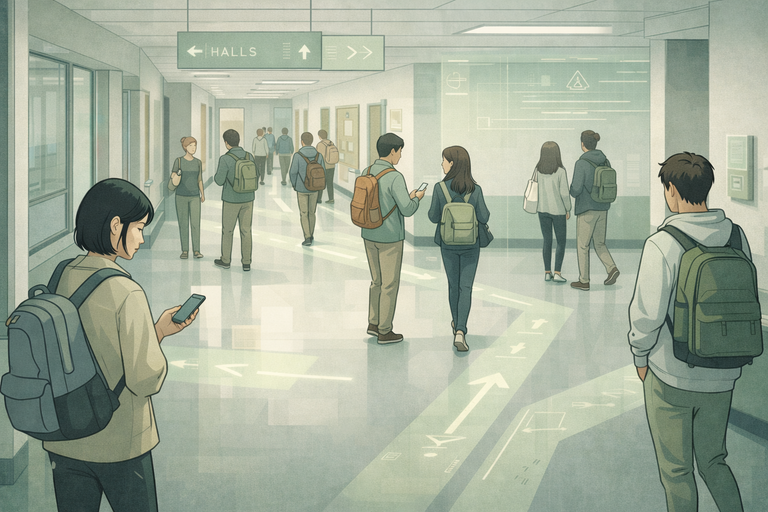
The project uses familiar campus language and spaces to make the first interaction believable. This lowers the barrier to entry before the story shifts into hidden records and system logic.
The audience encounters a normal-looking campus clue and understands how to enter.
The digital platform reveals records, traces, and evidence that deepen the mystery.
The final experience suggests the player may already be part of the system's archive.
04
This section documents how Beyond the Shadows developed from an early allegorical idea into a three-platform interactive narrative. It combines written process notes, PPT-derived visual evidence, user journey structure, iteration decisions, and AI use.
1. Initial Narrative Idea
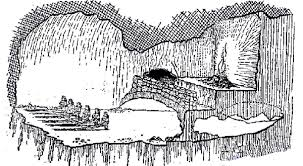
The earliest narrative idea began with Plato's Allegory of the Cave. Instead of showing a literal cave, the project translated the idea of shadows, limited perception, and awakening into a contemporary campus environment. The first emotional direction was quiet unease: the world should look familiar and safe, but small details should suggest that the user's reality has already been shaped by something unseen.
At this stage, the story was less about solving one mystery and more about noticing a pattern. The participant would encounter normal campus communication, follow a clue, and slowly understand that comfort and order can become forms of control. This early direction established the tone of calm surveillance, institutional logic, and gradual discovery.
2. World Building
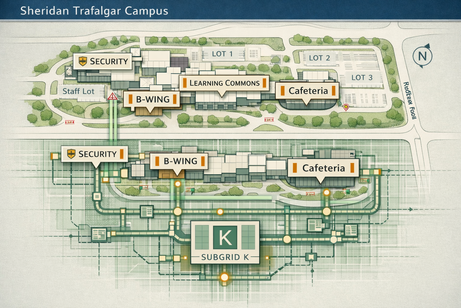
The world became more defined when the campus stopped being only a setting and became the main narrative mechanism. The hidden system does not control people through direct force. Instead, it shapes movement, information, routes, interfaces, and everyday assumptions until students accept the filtered version of campus life as normal.
The user is positioned as a student who notices anomalies that other people ignore. This role is important because the audience does not start with full knowledge. They begin inside the same ordinary environment as everyone else, which makes each discovered clue feel like a break in the surface of reality. Over time, the world expanded from a general hidden system into a more specific structure connected to Julian Mercer, campus planning, archive records, route logic, and institutional stability.
3. Narrative Structure and User Journey
The final structure was organized as a staged journey. Each stage reveals a different layer of the story, so the audience is not given the full explanation at the beginning. The narrative is built around a controlled escalation from a believable public entry point to personal implication inside the hidden system.
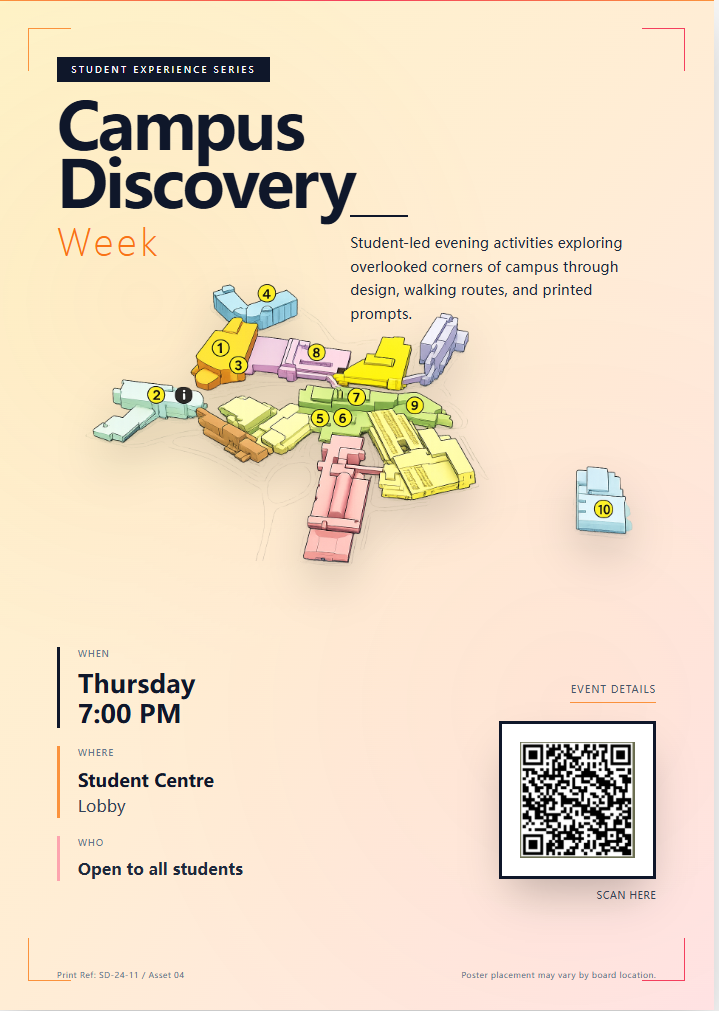
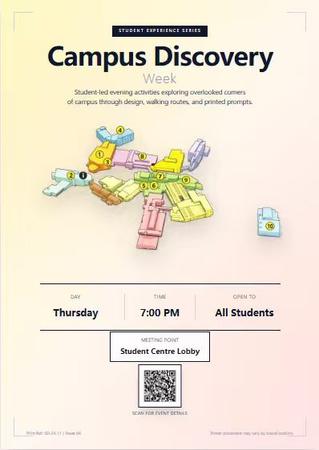
A campus poster appears to advertise a normal student event, making the first contact believable.
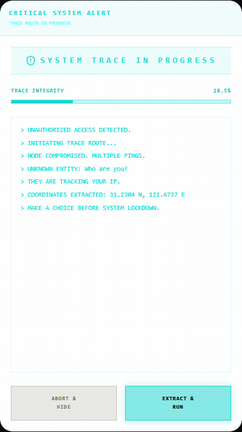
The QR code leads to a page that begins normally, then shifts through a system override.
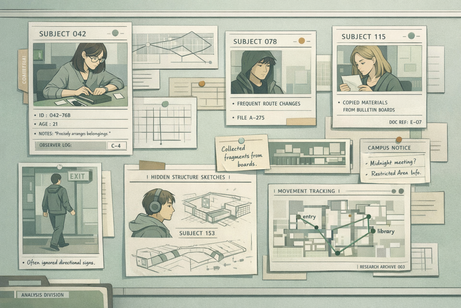
Encrypted messages, terminal screens, and records ask the user to interpret rather than passively read.
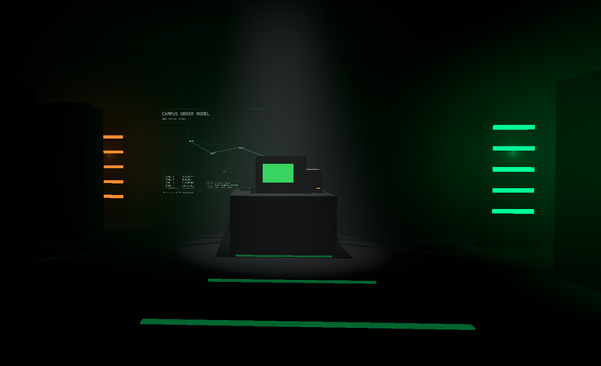
The game environment turns the hidden system into a physical, navigable space.
The user realizes the archive may not only contain other subjects, but may also include them.
4. Narrative Iteration
The early story focused mainly on uncovering that a hidden system existed. The risk was that the narrative could feel like a simple reveal: find a clue, discover surveillance, and escape the system.
The later version became more psychological and allegorical. The system is not completely unknown; many people sense it but choose stability over doubt. This made the ending less about escape and more about awakening.
Overly direct exposition that explained the system too early was reduced so the audience could discover meaning through interaction.
The campus shifted from a neutral background into an active narrative environment shaped by routes, archives, and interface logic.
The final reveal was reframed so the player feels implicated in the archive instead of only observing someone else's story.
5. Visual Narrative Content
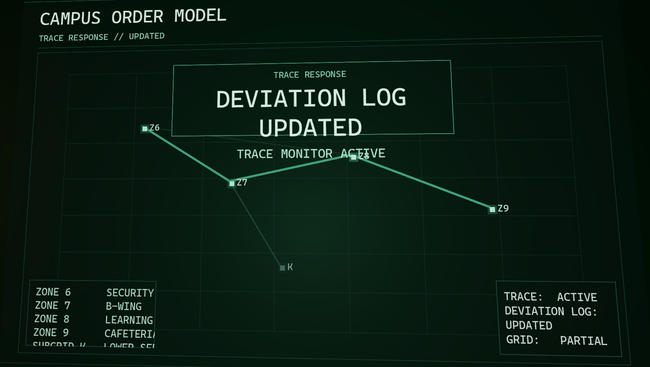
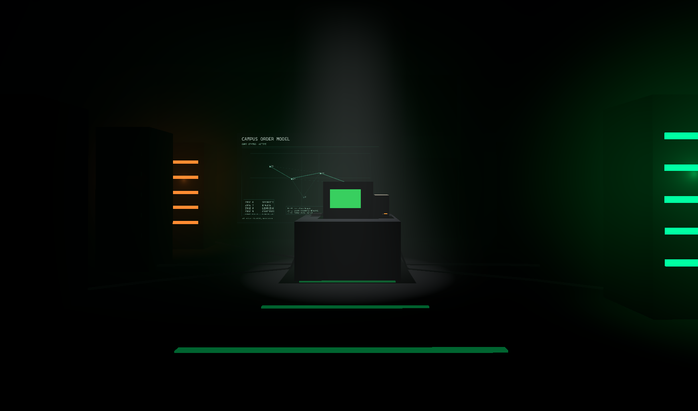
These visuals support the narrative process by showing how the story moved across poster, interface, archive, map, and game-space formats. Each image represents a decision about how the audience should understand the hidden system.
6. Written Narrative Development
The writing process began by defining the central contradiction of the project: the campus should feel open and ordinary, but its order should also feel too intentional. This helped shape the project's emotional rhythm. Instead of starting with danger, the story starts with familiarity. The audience first recognizes the language of campus events, maps, and QR codes, then gradually notices that the same systems used for convenience can also become tools of behavioral control.
As the narrative developed, the writing moved from broad world-building to staged revelation. The poster could not reveal too much, because its job was to create trust. The digital layer needed to introduce interruption, evidence, and decoding, because its job was to shift the user from viewer to investigator. The final game needed to carry the emotional weight of the project, because it transforms the hidden system from information into a lived space.
The most important writing decision was to avoid a simple good-versus-evil explanation. The hidden system became more unsettling when it was connected to comfort, stability, and shared acceptance. This made the story align more closely with the allegory: the problem is not only that shadows exist, but that people can learn to prefer them because they make life easier.
7. AI in the Narrative Process
AI was used as a support tool during the narrative process, especially for generating options, refining language, testing visual directions, and speeding up prototyping decisions. It did not replace the final narrative judgment; the project structure, tone, platform sequence, and final interpretation were selected and edited through human decision-making.
AI helped generate possible ways to adapt the Allegory of the Cave into a contemporary campus mystery.
AI was used to test wording for system messages, archive language, and clearer explanations of the user journey.
AI-assisted visual exploration helped test the atmosphere of institutional order, hidden interfaces, and controlled spaces.
AI supported interface and website prototyping by helping organize section structure, interaction logic, and readable documentation.
AI suggestions often needed editing because they could become too literal, too dramatic, or too generic. The final choices still depended on human judgment: deciding which ideas matched the project's quiet tone, which visuals supported the allegory, and how each platform should reveal information at the right pace.
05
AI supported refinement, iteration, and development across the three platforms, but the final structure and creative decisions remained human-led.
AI helped clarify story details, refine wording, and strengthen the movement from poster entry, to digital discovery, to the final game experience.
AI was useful for testing visual directions, generating supporting concept imagery, and exploring how archival materials, hidden interfaces, and environmental storytelling could be represented more clearly.
Suggestions were selected, edited, and adapted to match the project's tone of calm control, institutional order, and gradual awakening. AI acted as a brainstorming tool, not the author.
06
The walkthrough evaluates clarity, navigation, narrative progression, and whether each platform successfully guides users into the hidden system.
The project used A/B testing, interview questions, post-test questions, and task-based testing across the poster, digital exploration phase, and final game experience.
Users responded well to the mystery and atmosphere. The poster entry point felt believable, the override moment made the narrative shift clear, and the final game environment successfully communicated exploration inside a hidden system.
Feedback led to a clearer call to action, more readable digital exploration pacing, stronger hints for decoding, and improved spatial cues in the final game reveal.
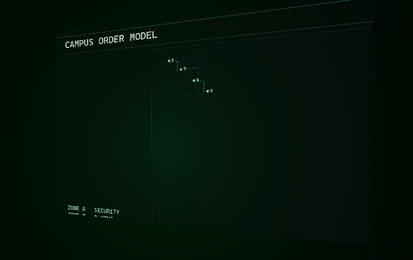
The process archive documents platform screens, visual tests, and interface experiments that helped connect the project from public clue to immersive climax.
07
Project 3 made the concept feel more complete because the narrative had to work clearly across the poster, digital sequence, and final interactive platform.

The biggest challenge was narrative clarity. A strong world-building idea was not enough; each platform needed to guide the audience clearly while preserving mystery and atmosphere. The poster had to feel believable, the digital platform had to shift users into investigation, and the game had to function as the emotional and narrative climax.
08
The project draws from interactive narrative, mixed reality, usability testing, and media theory references.